Stop Guessing Your Calories: The One Number That Actually Matters for Your 2026 Weight Loss Goals
Abstract
Get your daily calorie needs sorted with our TDEE Calculator for losing, maintaining, or gaining weight. This guide cuts the BS and tells you exactly how to use this tool to nail your 2026 fitness goals.
Introduction: January 5th, packed gyms and February 14th, empty gyms
It's January 5th—the peak of New Year resolution season. Walk into any gym right now and it's absolutely packed. But by Valentine's Day? Half of those people are gone.
Why? Because most people are just guessing their calorie intake instead of doing the math.
Want to actually see your abs or fit into your goal jeans by spring? Stop guessing and figure out your Total Daily Energy Expenditure (TDEE). Let me show you exactly how to get this number right.
Why TDEE Matters So Much
TDEE is the total calories you burn in a day, including everything from basic life functions to daily activities and workouts.
Forget those generic "2,000 calorie diets" that don't work for anyone. Your TDEE is personalized based on your age, gender, height, weight, and activity level. It's completely tailored to you.
The data is clear: people who track calories based on actual energy needs have much higher success rates for losing and maintaining weight compared to those following generic plans.
Bottom line, success vs failure often comes down to this number. When you know your TDEE, you're not guessing—you're making smart nutrition decisions.
How to Use the TDEE Calculator
Step 1: Input Your Real Data (No Lying!)
The biggest mistake is using a generic "2,000 calorie diet." Our TDEE Calculator forces you to input real data that's tailored to you.
The interface is clean and easy to use. Metric (cm/kg) or US units (ft/lbs)? Just toggle between them. Enter this info:
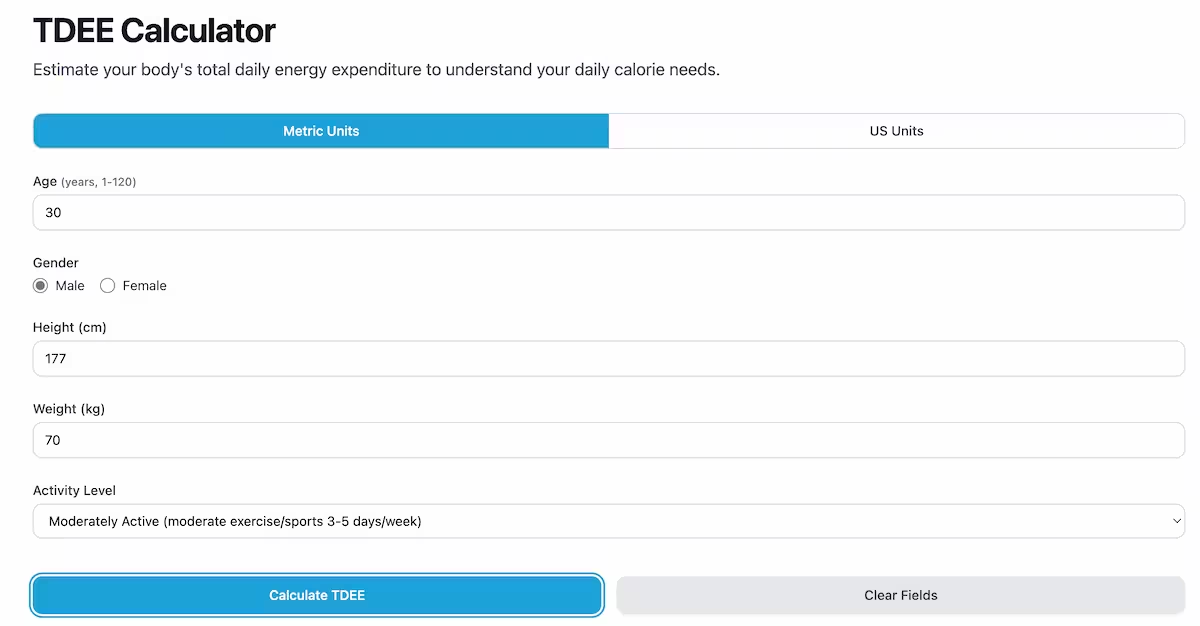
- Age: Age affects metabolism, so your calorie needs change
- Gender: Men and women have different metabolisms
- Height: Affects your Basal Metabolic Rate
- Weight: Current weight is crucial for accurate results
- Activity Level: This is the key that reflects your actual lifestyle
Step 2: Choose Your Activity Level
The "Activity Level" option is crucial for accuracy. It differentiates between sitting at a desk all day and hitting the gym 3-5 times a week. Options include:
- Sedentary (little or no exercise)
- Lightly active (light exercise 1-3 days/week)
- Moderately active (moderate exercise 3-5 days/week)
- Very active (hard exercise 6-7 days/week)
- Extra active (very hard exercise & physical job)
Be honest here—overestimating your activity level just gives you wrong results and screws up your goals.
Step 3: Understanding the Results (BMR vs. TDEE)
Hit "Calculate" and you get detailed results that are way more useful than just one number:
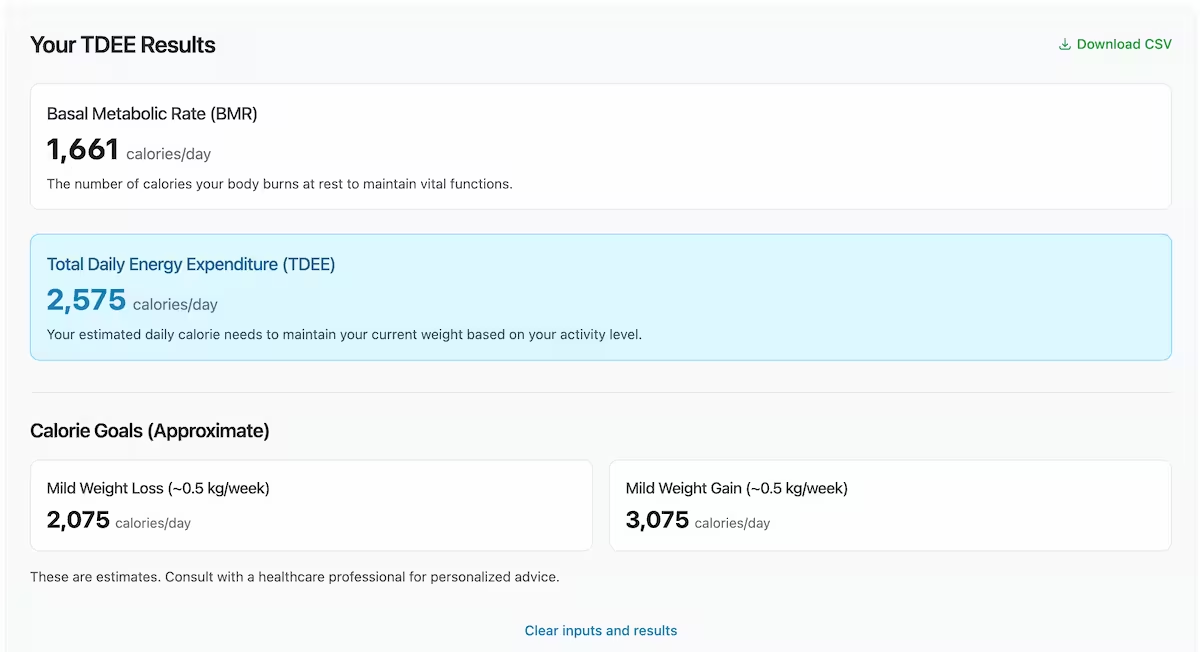
- BMR (Basal Metabolic Rate): Calories you burn just lying around
- TDEE (Total Daily Energy Expenditure): Your maintenance calories—eat this much and your weight stays the same
- Goal Breakdown: Weight loss and gain targets based on your TDEE
The Science Behind TDEE
TDEE is simply BMR multiplied by an activity factor. This is way more accurate than basic calorie-per-pound calculations because it factors in your actual lifestyle.
For weight loss, creating a deficit based on your TDEE is the most effective method. A moderate 500-750 calorie daily deficit typically gives 1-2 pounds per week weight loss, which is safe and sustainable. The calculator automatically gives you these numbers, making it easy to set realistic goals.
Knowing your TDEE also lets you plan for different phases. Want to lose fat while keeping muscle? You can calculate the right calorie intake and ensure adequate protein based on your lean body mass.
How to Use Your TDEE Results
Strategy 1: Track Precisely
Once you know your TDEE, tracking becomes your secret weapon. Use the calculator results as your baseline and track your actual intake with an app or food diary. Make small adjustments based on progress—slightly increase calories if weight loss stalls or decrease if it's too fast.
Strategy 2: Flexible Dieting
Your TDEE allows flexible dieting—you can enjoy various foods while staying within your calorie target. This is more sustainable than restrictive diets because it focuses on quantity rather than eliminating food groups.
Strategy 3: Adjust Over Time
Metabolism adapts over time, especially during extended dieting. Regularly reassessing your TDEE and adjusting intake ensures continued progress. As you lose weight, your TDEE decreases, requiring fewer calories to maintain the same rate of weight loss.
Frequently Asked Questions
Q1: How often to recalculate TDEE?
A: Recalculate when you experience significant weight changes (5-10 lbs), activity level changes, or life changes. Generally reassess every 4-6 weeks during weight loss phases.
Q2: What if weight loss stalls despite following TDEE?
A: Plateaus are normal. First, verify your tracking is accurate. Then consider your metabolism may have adapted, requiring a small adjustment to calories or an increase in activity.
Q3: Can I use TDEE for muscle gain too?
A: Absolutely! The calculator shows the caloric surplus needed for muscle gain. For optimal muscle building, aim for a 300-500 calorie surplus above your maintenance TDEE combined with resistance training.
Conclusion: Stop Guessing, Start Calculating
Stop "hoping" weight drops off on its own. The TDEE calculator turns complex energy balance science into a simple, actionable number.
Get started with our TDEE Calculator and use data to guide your 2026 fitness plan. With precise tracking and personalized targets, you'll achieve your goals with confidence and sustainability.